


In commercial buildings, a malfunctioning dumbwaiter can interrupt daily work, delay deliveries, and create safety concerns for employees. Routine servicing helps identify problems with doors, interlocks, motors, cables, controls, and other mechanical or electrical components before they develop into more serious faults. An experienced Elevator Company in Dubai can also help building managers assess their lifting equipment maintenance requirements.
This guide explains how Dumbwaiter Maintenance in Dubai works, which components require attention, what different businesses should consider, and how to establish a practical preventive maintenance schedule.
What Is Dumbwaiter Maintenance and Why Is It Important?
Dumbwaiter maintenance is the planned inspection, testing, cleaning, adjustment, and repair of a small goods lift used to transport items between floors. An experienced elevator company in Dubai can provide professional maintenance and servicing to help ensure reliable dumbwaiter operation. Unlike passenger elevators, dumbwaiters are generally designed to carry goods rather than people.
Regular maintenance helps businesses:
- Identify worn or damaged components.
- Check door locks and safety interlocks.
- Detect unusual noises, vibration, or movement.
- Maintain reliable operation and reduce avoidable downtime.
- Identify faults before they lead to more extensive repairs.
The maintenance requirements depend on the equipment type, usage frequency, installation environment, and manufacturer’s instructions. Professional Elevator Services can help establish an appropriate maintenance schedule. A dumbwaiter operating throughout a busy restaurant may require closer monitoring than one used occasionally in a small office.
Which Dumbwaiter Components Need Regular Inspection?
A thorough maintenance visit should cover the main mechanical, electrical, and safety components. An experienced elevator installation company can also help assess equipment condition and recommend suitable maintenance solutions. The exact inspection procedure depends on the dumbwaiter’s design and should follow the manufacturer’s documentation.
1. Doors and Door Interlocks
Technicians check door alignment, hinges, latches, and locking mechanisms. Door interlocks help prevent operation when the relevant access door is not properly secured. Damaged or unreliable interlocks must be investigated before the equipment returns to service.
2. Motor and Drive System
The motor and associated drive components provide the force needed to move the car between floors. Inspections may identify unusual sounds, overheating, vibration, or inconsistent movement that requires further investigation.
3. Cables, Ropes, and Guide Components
Where fitted, suspension ropes or cables, guide rails, rollers, and related components should be checked for wear, damage, alignment, and other signs of deterioration. Inspection methods must suit the specific equipment design.
4. Electrical Controls and Safety Devices
Technicians inspect operating buttons, control panels, floor-position controls, wiring, and applicable safety devices. Faulty controls can cause intermittent operation, failure to respond, or unexpected shutdowns.
5. Car and Landing Areas
The car interior, loading area, and accessible landing areas should be kept free of obstructions. Excessive loads, unevenly distributed goods, and debris can affect operation and contribute to equipment damage.
How Does Maintenance Differ Across Commercial Buildings?
Commercial dumbwaiter maintenance should reflect how the equipment is used, what it carries, and the conditions in which it operates. An experienced Elevator Company in Umm Al Quwain can help assess these requirements and recommend suitable maintenance solutions. Different workplaces face different operational demands, so a single maintenance approach may not suit every building.
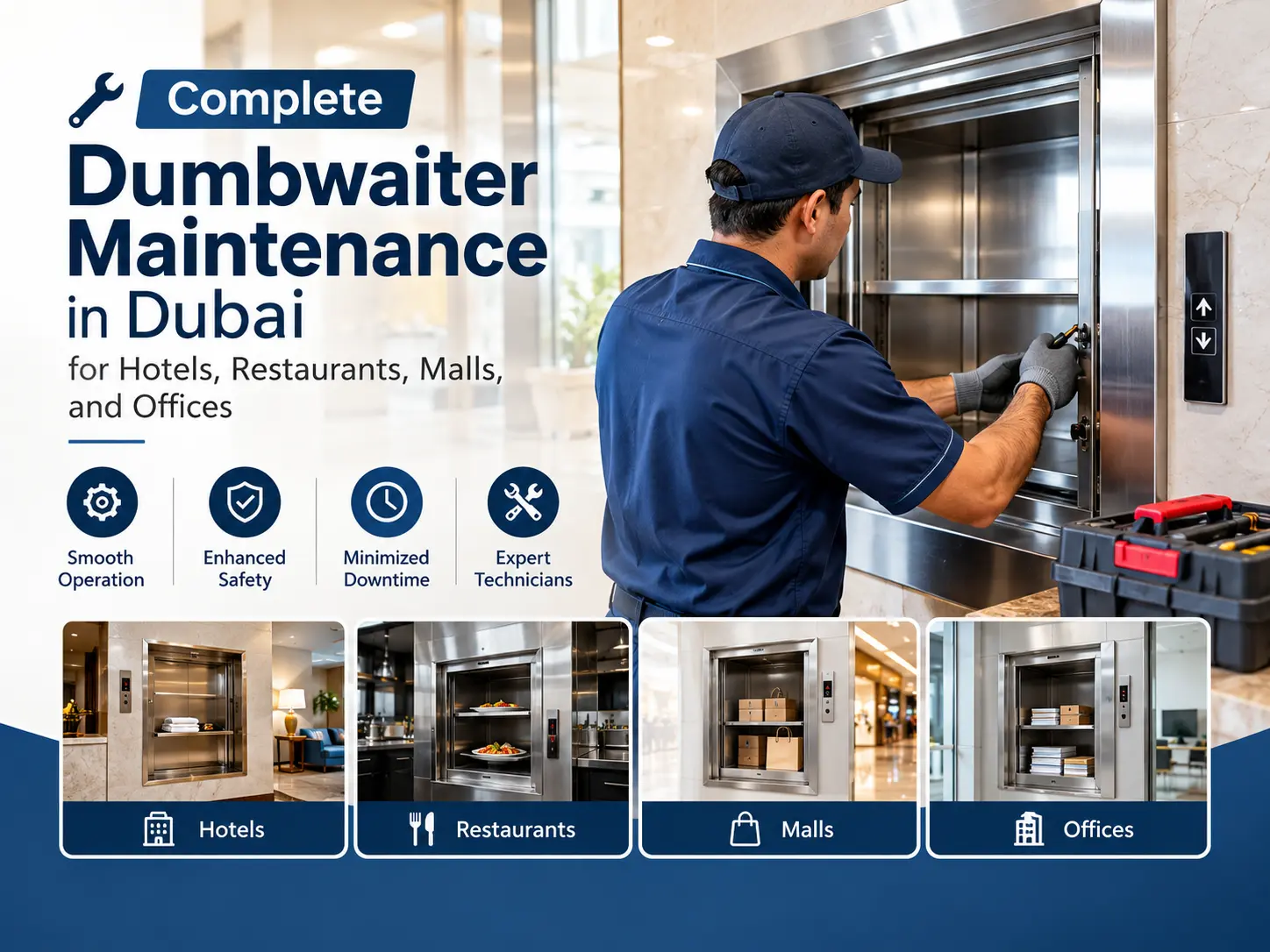
Hotels
Hotel dumbwaiters may transport housekeeping supplies, linen, amenities, and other goods. Maintenance should consider frequent daily use, loading practices, door operation, and any dust or debris that could affect moving components.
Restaurants and Commercial Kitchens
Dumbwaiter Maintenance in Dubai for restaurants requires particular attention to grease, food residue, moisture, and cleaning practices around the equipment. Technicians should check door operation, controls, and moving parts for contamination or deterioration. Staff should never use the dumbwaiter to carry people or exceed its rated capacity.
Shopping Malls
Malls may use dumbwaiters to move maintenance materials, retail supplies, or other small goods between designated areas. Inspection planning should account for usage patterns, access restrictions, and the need to coordinate maintenance without unnecessarily disrupting business operations.
Offices
Office dumbwaiters may carry documents, stationery, and light supplies. Maintenance should focus on dependable operation, secure doors, responsive controls, and the condition of frequently used components.
How Often Should a Dumbwaiter Be Serviced in Dubai?
A dumbwaiter should be serviced according to its manufacturer’s recommendations, operating conditions, usage frequency, and applicable requirements. An experienced Elevator Company in Fujairah can help determine a suitable maintenance schedule based on the equipment’s condition and operational needs. There is no single maintenance interval suitable for every installation.
A practical maintenance plan includes:
- Daily user checks: Look for visible damage, unusual sounds, obstructed doors, and obvious operating problems. These checks do not replace technical inspections.
- Scheduled professional servicing: Arrange inspections at intervals appropriate to the equipment and its usage.
- Prompt fault assessment: Stop using the equipment if a safety-related fault, abnormal movement, or damaged component is suspected.
- Maintenance records: Document inspections, repairs, replaced parts, and outstanding issues.
A qualified technician can recommend a suitable schedule based on the equipment manual and its condition. Dumbwaiter preventive maintenance should also be reviewed when usage increases or the operating environment changes.
Common Dumbwaiter Problems and When to Arrange Repairs
Some faults appear gradually, while others cause an immediate shutdown. Recognising warning signs early can help building managers arrange appropriate repairs.
| Common problem | Possible cause | Recommended response |
| Doors will not close properly | Misalignment, damaged latch, or obstruction | Stop use and arrange inspection |
| Dumbwaiter does not move | Power, control, or safety interlock fault | Request a qualified technician |
| Unusual noise or vibration | Worn, loose, or misaligned components | Arrange a technical assessment |
| Intermittent operation | Electrical or control-system fault | Record the symptoms and request diagnosis |
| Slow or uneven movement | Drive, guide, or mechanical issue | Avoid further use until assessed if operation appears unsafe |
Dumbwaiter Repair Dubai services should begin with fault diagnosis rather than replacing parts based on appearance alone. The technician should identify the underlying cause, confirm the suitability of replacement components, and test the equipment before returning it to service.
Do not bypass interlocks, open electrical panels, or attempt repairs without appropriate training and authorisation. If a fault could affect safe operation, take the unit out of service and restrict access until it has been assessed.
What Affects Dumbwaiter Maintenance Costs in Dubai?
The cost of servicing depends on the equipment and the work required. A routine inspection is different from a repair involving major mechanical or electrical components. Choosing from the Top Elevator Companies in UAE can help property owners find experienced professionals for reliable inspection, maintenance, and repair services.
Key pricing factors include:
- Dumbwaiter type, capacity, age, and configuration.
- Number of floors and accessibility of components.
- Frequency of use and condition of the equipment.
- Labour, diagnostic time, and replacement parts.
- Emergency attendance and the scope of the maintenance agreement.
When comparing Dumbwaiter Maintenance Services Dubai, ask for a clear scope of work, inspection frequency, exclusions, response arrangements, and details of how additional repairs will be quoted. A low initial price may not include replacement parts or corrective work.
How to Choose a Dumbwaiter Maintenance Provider
Choose a provider with relevant experience in the installed equipment type and a clear maintenance process. Before appointing a contractor, confirm that its technicians are appropriately qualified and authorised for the work.
Consider these points:
- Experience with commercial dumbwaiters and their control systems.
- Documented inspection procedures and maintenance reports.
- Access to suitable replacement components.
- Clear communication about faults, repair priorities, and costs.
- A defined process for handling breakdowns and safety-related issues.
Reliable Dumbwaiter Servicing Dubai should include documented findings and recommendations, not just a brief visual check. Dumbwaiter Inspection Services Dubai should also be appropriate to the specific equipment and any applicable local requirements.
For buildings requiring ongoing support, discuss a planned maintenance agreement that reflects actual usage and the manufacturer’s guidance. Businesses seeking Commercial Dumbwaiter Repair Services should also ask how faults are diagnosed, how parts compatibility is verified, and what testing is completed after repairs.
Conclusion
Regular dumbwaiter maintenance helps hotels, restaurants, malls, and offices maintain dependable goods transportation and identify equipment problems before they escalate. Experienced elevator contractors in Dubai can provide professional inspection and maintenance support covering doors, interlocks, motors, controls, guide components, and other parts relevant to the installed system.
For Dumbwaiter Maintenance in Dubai, businesses should establish a suitable preventive maintenance schedule, maintain service records, and address safety-related faults promptly. Choosing a qualified maintenance provider also helps ensure that repairs and replacement components are appropriate for the equipment.
Karsar Elevators can be contacted to discuss dumbwaiter maintenance requirements and the appropriate inspection or repair arrangements for your building. Visit the Karsar Elevators contact page to enquire about your requirements.
Frequently Asked Questions
1. How often should a commercial dumbwaiter be maintained?
The maintenance schedule depends on the manufacturer’s instructions, usage, equipment condition, and applicable requirements. Busy commercial installations may need more frequent attention. A qualified technician can recommend suitable inspection intervals and identify any additional checks needed for the operating environment.
2. Can a dumbwaiter be used if its door does not lock properly?
No. A faulty door lock or interlock can compromise safe operation. Stop using the equipment, prevent unauthorised access, and arrange an inspection by a qualified technician. The dumbwaiter should return to service only after the fault has been corrected and the required checks have been completed.
3. What are the most common dumbwaiter faults?
Common problems include door misalignment, defective interlocks, electrical control faults, unusual motor noises, inconsistent movement, and worn mechanical components. These symptoms can have several causes, so proper diagnosis is necessary before deciding which parts require repair or replacement.
4. Is preventive maintenance necessary for restaurant dumbwaiters?
Yes. Preventive maintenance helps identify deterioration, contamination, and operating problems before they cause avoidable disruption. Restaurant operators should also follow appropriate cleaning procedures, prevent overloading, and ensure that food residue or grease does not interfere with equipment components.
5. What should I check before hiring a maintenance company in Dubai?
Check the provider’s experience with your dumbwaiter type, technician qualifications, inspection procedures, maintenance reporting, replacement-part arrangements, and pricing terms. Confirm that the proposed service follows the manufacturer’s requirements and applicable local safety obligations.