



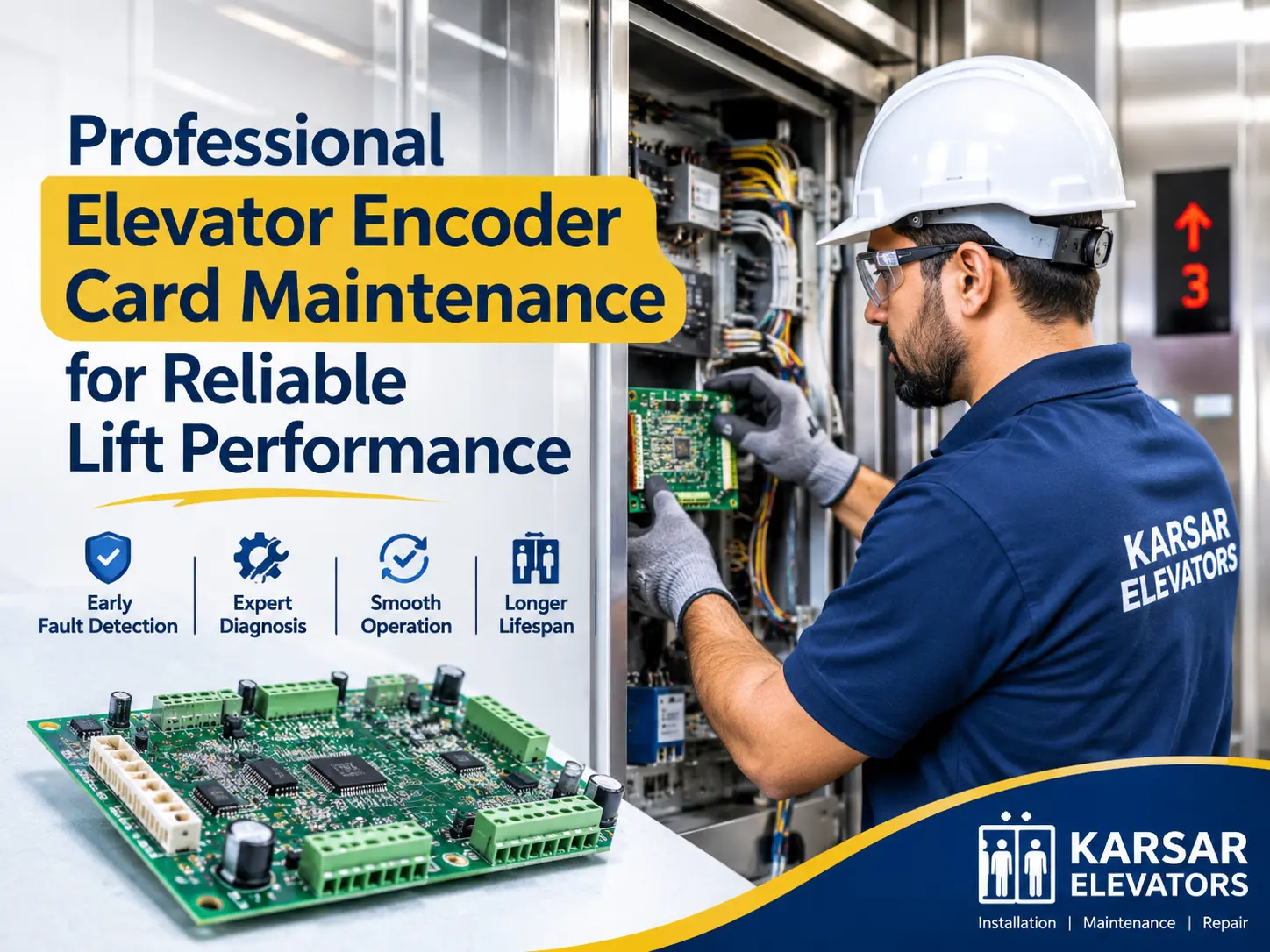

Elevator Encoder Card Maintenance helps identify feedback-related faults that can affect lift motor control, speed regulation and smooth operation. An encoder system provides information about motor rotation or position, while the encoder interface card receives or processes these signals for the elevator drive, depending on the system design. If the card, wiring or connected encoder develops a problem, the lift may display drive faults or stop operating normally.
Regular inspection and professional diagnosis, supported by reliable Lift and Escalator Maintenance Services, can help building owners and maintenance teams identify potential issues before replacing expensive components unnecessarily. Understanding encoder card compatibility, common warning signs and appropriate repair procedures also helps maintenance teams make informed decisions. This guide explains how encoder cards work, what maintenance involves and when professional technical support may be required.
What Is an Elevator Encoder Card?
An elevator encoder card is an electronic interface or feedback module used in compatible elevator drive systems. It enables the drive to receive signals from an encoder so that the motor’s movement can be monitored and controlled according to the system’s design. Professional Elevator Service helps ensure that encoder-related issues are properly inspected, diagnosed, and addressed to maintain reliable elevator operation.
The encoder and its interface card serve related but different purposes. The encoder measures rotation or position, while the interface card processes or communicates the feedback required by the drive.
A typical encoder feedback system includes:
- Rotary encoder: Detects motor rotation or position.
- Encoder cable: Carries power and feedback signals where applicable.
- Encoder interface card: Connects compatible feedback signals to the drive.
- Elevator drive: Uses feedback to regulate motor operation.
- Controller: Coordinates elevator movement and other operating functions.
The exact arrangement varies by manufacturer and drive model.
Why Is Elevator Encoder Card Maintenance Important?
Elevator Encoder Card Maintenance helps technicians detect loose connections, damaged cables, incorrect configuration and possible electronic faults. These issues can interfere with feedback signals and affect the elevator drive’s ability to control motor movement correctly.
Consistent maintenance offers several practical benefits:
- Early fault detection: Identifies potential feedback problems before they develop into recurring operational issues.
- Improved reliability: Helps reduce avoidable interruptions caused by neglected connections or unresolved faults.
- Accurate diagnosis: Supports a systematic assessment before deciding whether a card needs repair or replacement.
- Better component selection: Encourages verification of the correct replacement module.
- Maintenance planning: Helps building managers plan appropriate servicing and component procurement.
Maintenance cannot prevent every failure, but it can help teams identify problems and make better-informed repair decisions.
What Does Professional Elevator Encoder Card Maintenance Include?
Professional servicing should follow the Elevator manufacturer’s documentation and the applicable maintenance procedures. An experienced Elevator Company in Ajman should assess the complete feedback system rather than assuming that every encoder-related fault originates in the card.
1. Visual and Connection Inspection
A qualified technician checks accessible connections, connectors, cable condition and visible signs of damage. Loose plugs, damaged insulation, contamination or bent connector pins may affect feedback communication.
Electrical isolation must be performed according to the approved procedure before handling components.
2. Fault Code Review
Lift Encoder Card Troubleshooting begins with reviewing the drive’s displayed fault codes and available diagnostic information. Encoder communication errors may result from wiring problems, incompatible settings, a faulty encoder or a defective interface card.
The technician should consult the relevant drive manual before interpreting an error or changing configuration settings.
3. Signal and Configuration Checks
Testing may include verifying the encoder supply, feedback signals, interface settings and communication compatibility. These checks help distinguish between a wiring issue, incorrect configuration and a hardware fault.
4. Repair or Replacement Assessment
If testing identifies a defective component, the technician determines whether an approved repair is possible or whether replacement is necessary. Elevator Encoder Card Repair Services should be based on the actual fault and the manufacturer’s technical requirements.
How to Choose a Compatible Elevator Encoder Card for Lifts
Choosing a Compatible Elevator Encoder Card for Lifts requires more than matching the card’s appearance. The replacement must be suitable for the specific drive and feedback system.
Check the following details before ordering:
- Drive manufacturer and exact model number.
- Encoder card part number and hardware revision.
- Encoder signal type and communication protocol.
- Required supply voltage and electrical interface.
- Connector arrangement and mounting compatibility.
- Manufacturer-approved configuration and firmware requirements, where applicable.
Elevator Encoder Compatibility Testing helps verify that the proposed card matches the existing system. During Elevator Installation, confirm compatibility through technical documentation or the equipment manufacturer rather than relying on visual similarity alone.
When Is Elevator Encoder Card Replacement Necessary?
Elevator Encoder Card Replacement may be required when testing confirms hardware damage, persistent interface faults or a failed electronic component that cannot be repaired appropriately.
However, an encoder-related error does not automatically mean the card is defective. Manufacturer troubleshooting documentation identifies wiring, connections and feedback-device compatibility as possible causes of certain encoder faults. Consulting an experienced Elevator Company in Dubai can help ensure that the fault is diagnosed correctly before a replacement is selected.
Before replacing a card, technicians should:
- Record the fault code and operating symptoms.
- Inspect the relevant cables and connectors.
- Verify encoder and drive compatibility.
- Perform the specified diagnostic tests.
- Confirm the fault source and select the correct replacement if needed.
After replacement, the technician should complete the required configuration, commissioning checks and operational testing before returning the lift to normal service.
Common Signs of Encoder Feedback Problems
Possible warning signs include:
- Encoder communication or feedback error messages.
- Unexpected elevator shutdowns associated with drive faults.
- Irregular motor operation or difficulty maintaining controlled movement.
- Recurring faults after a previous repair.
- Feedback signals that are missing or inconsistent during diagnosis.
These symptoms can have several causes. A qualified technician should inspect the complete مصعد system instead of replacing components based on symptoms alone.
How Much Does Encoder Card Maintenance Cost?
The cost depends on the drive model, fault complexity, inspection requirements, component availability and whether repair or replacement is necessary. A Trusted Elevator Company in Umm Al Quwain can also assess whether additional commissioning or configuration work is required, as these factors may affect the final quotation.
For an accurate estimate, provide the service provider with the drive model, encoder card part number, fault code and a description of the operating problem. This information can help narrow down the required inspection and potential replacement options.
Conclusion
Professional elevator maintenance involves more than replacing components when faults occur. Elevator Encoder Card Maintenance helps technicians assess feedback connections, review drive errors and identify whether a problem originates in the encoder, wiring, interface card or configuration.
Selecting the correct replacement and completing the required commissioning checks can support reliable lift operation and reduce avoidable troubleshooting. Building owners and facility managers should arrange inspections through qualified professionals from Escalator and Elevator Companies in UAE and follow the equipment manufacturer’s recommendations.
For elevator maintenance, technical inspection or encoder-related fault assessment in the UAE, contact Karsar Elevators to discuss your lift system and service requirements.
Contact Karsar Elevators
Phone: +971 55 946 0194
Email: karsarliftsescalators@gmail.com
Frequently Asked Questions
1. How often should an elevator encoder card be inspected?
Inspection frequency should follow the elevator manufacturer’s recommendations, the maintenance contract and the equipment’s operating conditions. Technicians should also investigate recurring faults or abnormal feedback indications promptly.
2. Can an encoder card fault stop a lift?
Yes. Some encoder feedback faults can cause the drive to inhibit operation or stop the elevator, depending on the system and fault-handling settings. The cause must be diagnosed before the lift is returned to service.
3. Can a faulty encoder card be repaired?
Repair may be possible for certain faults, depending on component availability, manufacturer guidance and the extent of the damage. A qualified technician should determine whether repair or an approved replacement is the appropriate option.
4. Does every encoder fault require a new card?
No. Faults can originate from damaged cables, loose connections, incompatible feedback devices or incorrect settings. Proper testing helps identify the actual cause and prevents unnecessary replacement.
5. What information is needed to order a replacement card?
Provide the existing card’s part number, drive model, hardware revision and relevant encoder specifications. Confirm the required interface and configuration with the manufacturer or a qualified supplier before ordering.
6. Why is compatibility testing important?
Compatibility testing helps confirm that the card supports the drive’s feedback interface and required operating parameters. An incompatible module may fail to communicate correctly or may require configuration that the existing system does not support.