


An ageing elevator can create operational problems, increase maintenance requirements and affect passenger convenience. Building owners often face an important decision: should they upgrade the existing equipment or install a completely new system? Understanding Elevator Modernization vs Replacement helps property managers compare both options based on equipment condition, performance, safety requirements and long-term operating costs.
Elevator modernization involves upgrading selected components of an existing lift, while replacement involves removing some or all of the existing equipment and installing a new system. The right choice depends on the elevator’s structural condition, controller technology, availability of spare parts, usage patterns and building requirements. Evaluating these factors before starting a project can help avoid unnecessary expenditure and future operational difficulties. When comparing proposals from Elevator and Escalator Companies in UAE, building owners should also review technical expertise, maintenance support and the scope of work offered.
What Is Elevator Modernization?
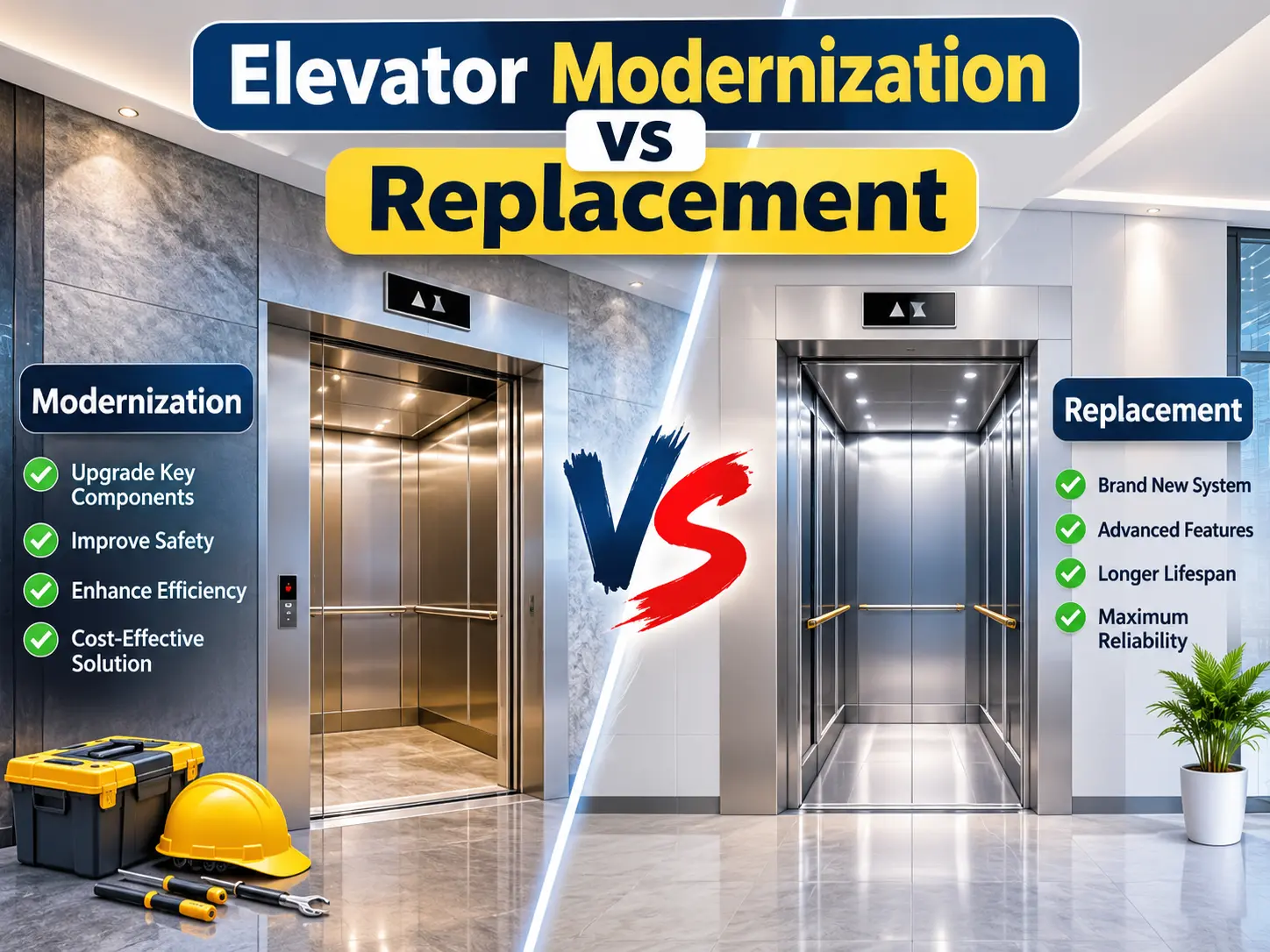
Elevator modernization is the process of upgrading an existing elevator by replacing outdated or inefficient components with newer technology. Instead of removing the entire system, selected parts are improved to enhance performance, reliability, passenger comfort and operational efficiency.
Depending on the equipment’s condition, modernization may include:
- Elevator Controller: Replacing outdated control systems with modern controllers for improved operation.
- Drive System: Upgrading the motor drive to support smoother acceleration and deceleration.
- Door Operator: Improving door movement, opening speed and closing performance.
- Landing and Car Operating Panels: Installing updated buttons, displays and operating interfaces.
- Safety Components: Assessing and upgrading relevant safety devices according to applicable requirements.
- Lighting and Interior: Improving cabin lighting, finishes and passenger convenience.
When evaluating Elevator Services in UAE, building owners should consider whether upgrading selected components can improve the existing system’s performance and meet their operational requirements.
The modernization scope should be determined through a technical inspection. Not every elevator requires every component to be replaced.
What Is Complete Elevator Replacement?
Complete elevator replacement involves removing the existing elevator equipment and installing a new system that meets the building’s current operational requirements. The work may include replacing the controller, motor, traction equipment, doors, cabin components, wiring and associated systems.
This option is generally considered when the existing equipment has extensive deterioration, major compatibility limitations or technical problems that cannot be addressed effectively through selective upgrades.
Replacement may also be appropriate when building owners want to change the elevator’s capacity, speed, configuration or overall design. However, structural conditions, shaft dimensions and building infrastructure must be assessed before selecting a new system.
Elevator Modernization vs Replacement: Key Differences
Both options aim to improve elevator performance, but they differ in project scope, cost, installation requirements and expected outcomes.
| Comparison Factor | Modernization | Replacement |
| Project scope | Selected components are upgraded | Existing equipment is extensively or completely replaced |
| Initial investment | Often lower | Generally higher |
| Installation work | Usually more limited | More extensive |
| Downtime | Depends on upgrade scope | Usually longer |
| Existing infrastructure | More components may be retained | Compatibility with new equipment must be assessed |
| Technology | Selected systems are updated | New integrated elevator system |
| Suitable condition | Existing system remains technically suitable | Existing system has extensive limitations |
The decision between Elevator Modernization vs Replacement should not depend on initial price alone. Long-term maintenance, component availability, equipment compatibility and building requirements also matter.
What Are the Benefits of Elevator Modernization?
Modernization can extend the useful service life of suitable existing equipment while improving its operation. It is particularly useful when the elevator’s main structure remains in acceptable condition but certain components have become outdated.
Key benefits include:
- Improved Performance: Updated controllers and drive systems can support smoother starts, stops and floor levelling.
- Better Passenger Experience: New door operators, displays and cabin features can improve everyday convenience.
- Reduced Maintenance Difficulties: Replacing obsolete components may make servicing easier when suitable replacement parts are available.
- Technology Upgrades: Modern controls can provide improved operational functions and system monitoring.
- Flexible Project Scope: Building owners can prioritise components according to technical findings and available budgets.
For buildings where modernization is not sufficient to meet operational requirements, an Elevator Installation Service may be considered as an alternative after evaluating the existing equipment and building infrastructure.
However, modernization does not automatically eliminate every maintenance issue. The existing equipment must be assessed to determine whether the proposed upgrades will work reliably together.
When to Replace Elevators Instead of Modernizing?
Complete replacement should be considered when the existing elevator has extensive deterioration, serious compatibility problems or limitations that cannot be resolved through practical upgrades.
Common warning signs include:
- Frequent Breakdowns: Repeated failures across multiple major components may indicate wider equipment deterioration.
- Obsolete Technology: Older controllers and electronic systems may become difficult to maintain when compatible spare parts are unavailable.
- Major Mechanical Wear: Significant deterioration of the motor, machine, braking equipment or other essential components may make selective upgrades unsuitable.
- Changing Building Requirements: Increased passenger traffic or changes in building usage may require a different elevator capacity or configuration.
- High Long-Term Repair Expenses: Repeated repair costs and ongoing downtime may make a new installation more practical.
Understanding When to Replace Elevator equipment requires more than checking its age. A qualified elevator professional should evaluate the condition of the complete system before recommending replacement.
Elevator Replacement Cost vs Modernization: What Affects the Price?
The cost difference depends on the elevator’s existing condition, the work involved and the equipment selected. Modernization often requires a smaller initial investment because suitable existing components can remain in use, while complete replacement generally involves more extensive installation work.
Important pricing factors include:
- Elevator type, capacity and travel height.
- Condition of the existing motor, controller and mechanical systems.
- Number of components requiring replacement.
- Availability of compatible spare parts.
- Electrical and structural modifications.
- Installation labour, testing and commissioning.
- Required safety upgrades and applicable approvals.
There is no universal price for either option. When comparing Elevator Replacement Cost vs Modernization, request itemised quotations that explain the proposed work, equipment specifications, exclusions, warranty and expected downtime.
Elevator Upgrade vs New Installation: How to Choose?
The choice between an upgrade and a new installation should follow a proper technical assessment rather than a general assumption that newer equipment is always necessary.
Building owners can follow these practical steps:
- Arrange an Inspection: Ask a qualified elevator company to inspect the existing equipment and identify its condition.
- Review Maintenance Records: Examine recurring breakdowns, repair history and replaced components.
- Check Spare Part Availability: Confirm whether essential components can still be sourced and supported.
- Compare Technical Proposals: Request separate modernization and replacement options wherever both are technically feasible.
- Calculate Long-Term Expenses: Consider installation, maintenance, energy consumption, downtime and future component availability.
- Verify Safety Requirements: Confirm that the proposed work meets the applicable local regulations and technical requirements.
For UAE projects, building owners should check the requirements of the relevant emirate and competent authority. The UAE Government identifies local municipalities as responsible for overseeing building and construction safety.
Important Considerations Before Starting an Elevator Project
Before approving either option, building owners should consider the following:
- Safety Assessment: Existing safety devices and proposed modifications must be evaluated by competent professionals.
- System Compatibility: New controllers, drives, motors and door systems must work with the retained equipment.
- Building Operations: Plan alternative passenger access during installation or modernization downtime.
- Future Maintenance: Confirm technical support, documentation and replacement part availability.
- Testing and Handover: Require appropriate testing, inspection records and documentation before returning the elevator to normal operation.
For technical reference, ASME publishes A17.1 for elevator and escalator safety and A17.3 for existing elevators and escalators. Their applicability depends on the jurisdiction and adopted requirements; they should not be assumed to replace UAE local regulations.
Conclusion
Choosing between upgrading an existing lift and installing a new system depends on its technical condition, maintenance history, safety requirements and long-term operating costs. Modernization can be a practical option when the existing equipment remains suitable, while replacement may offer a better approach when major systems are outdated or extensively damaged.
Before deciding, compare both proposals, review equipment compatibility and consider future maintenance requirements. A professional assessment from an experienced elevator company can help building owners make an informed decision about Elevator Modernization vs Replacement.
Karsar Elevators, an experienced Elevator Company in UAE, provides elevator-related services across the UAE. Contact the team to discuss your building’s elevator requirements and explore suitable modernization or replacement options.
Frequently Asked Questions
1. Is elevator modernization better than complete replacement?
Choosing between Elevator Modernization vs Replacement depends on the existing elevator’s condition and operational requirements. Modernization can be more practical when the existing structure and major equipment remain suitable for continued operation. Replacement may be preferable when multiple essential components have deteriorated or the existing system cannot meet the building’s requirements through reasonable upgrades.
2. How long does elevator modernization take?
The duration depends on the number of components being upgraded, equipment availability, installation complexity and testing requirements. A limited upgrade may take less time than a complete modernization project. The elevator contractor should provide a project-specific schedule before work begins.
3. Does elevator modernization improve passenger safety?
Modernization can improve safety when appropriate safety-related components are assessed and upgraded. However, replacing a controller or improving cabin interiors alone does not establish that an elevator is safe. The complete system must be evaluated against applicable requirements.
4. When should an old elevator be replaced?
Consider replacement when major mechanical components are severely deteriorated, essential spare parts are unavailable, breakdowns continue despite repairs or the equipment cannot reasonably meet current building requirements. Age alone should not determine the decision.
5. Can an elevator motor be retained during modernization?
Yes, in some projects an existing motor can be retained if its condition, capacity and compatibility with the proposed drive and control systems are suitable. A technical inspection is necessary before making this decision.
6. Is elevator modernization possible without replacing the doors?
Yes. Existing doors may be retained if their condition, operation and safety arrangements are suitable. However, door operators, locking mechanisms or related safety components may still require upgrades depending on the assessment.
7. Does elevator replacement require structural changes?
Not always. If the new elevator is compatible with the existing shaft, pit, overhead clearance and machine-room arrangements, major structural changes may not be necessary. Any proposed changes should be checked through a site assessment and engineering review. Understanding Elevator Modernization vs Replacement helps building owners evaluate these structural requirements before approving a project.