



An Elevator Photoelectric Switch is an electronic sensing device that uses light to detect objects, movement, or changes in a detection area. In elevator door systems, photoelectric sensors can help detect passengers or objects in the doorway and signal the door controller to reopen or prevent closing, depending on the system design.
This component plays an important role in the convenient and safe operation of automatic elevator doors in residential buildings, offices, hotels, shopping centres, and hospitals. Understanding how it works can help building owners and facility managers recognise potential sensor problems and arrange timely maintenance. For properties in the UAE, regular elevator inspections and professional servicing through our Escalator and Elevator Services offerings are particularly useful for keeping door systems operating reliably under frequent daily use.
What Is an Elevator Photoelectric Switch?
An elevator photoelectric switch is a sensor that detects an object by monitoring light emitted toward a target or received by a detector. Depending on its design, it may detect an interruption in a light beam, reflected light, or a change in light intensity.
In elevator applications, photoelectric sensing technology is commonly used in door protection and other detection functions. A multi-beam light curtain, for example, creates several detection zones across the doorway to help identify a person or object in the closing path. Similar sensing and safety technologies may also be considered in Travelator Services to support reliable passenger movement and equipment operation.
The exact function depends on the sensor type and the elevator’s control system. Not every Elevator Photoelectric Switch performs the same task, so the correct device must be selected for its intended application.
How Does an Elevator Photoelectric Switch Work?
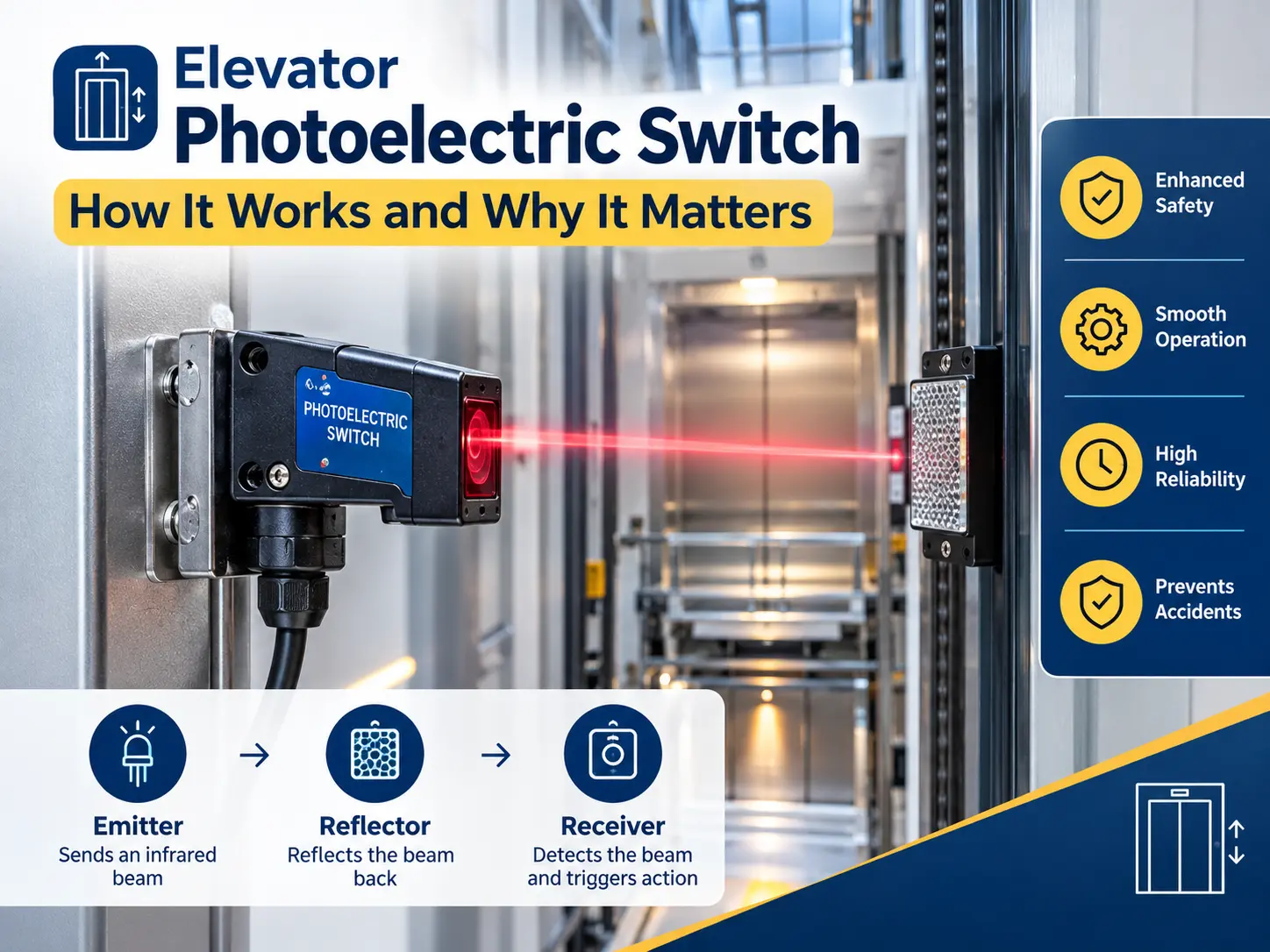
The Optical Switch Working Principle involves sending light toward a detection area and monitoring the light received by the sensor. When an object interrupts or changes that light, the sensor generates an electrical signal that the connected controller can interpret. Proper sensor integration is also an important consideration during Elevator Installation Service to support accurate door operation and reliable system performance.
A typical elevator door detection process works as follows:
- Light is emitted: The sensor sends infrared or another specified type of light across or into the detection area.
- Light is monitored: A receiver measures the light reaching it, or the sensor evaluates reflected light.
- An object is detected: A passenger, bag, or other obstruction changes the expected light signal.
- A signal is sent: The sensor communicates the detection status to the elevator door controller.
- The door responds: If the system is designed for door protection, the controller may stop closing or command the doors to reopen.
The response depends on the installed equipment, configuration, and control logic. The sensor works as part of the overall door system rather than as a standalone safety guarantee.
What Are the Main Benefits of an Elevator Photoelectric Sensor?
An Elevator Photoelectric Sensor can improve door operation by providing electronic detection without relying solely on physical contact. Its proper use and maintenance should follow applicable Elevator and Escalator Safety Guidelines and the manufacturer’s recommendations.
Key benefits include:
- Improved passenger protection: Helps identify people or objects in the doorway during door closing.
- Convenient access: Supports automatic door reopening when an obstruction is detected and the system is configured accordingly.
- Reduced contact with doors: Detection can help minimise situations in which closing doors press against a passenger or object.
- Support for busy buildings: Useful in offices, hotels, hospitals, and shopping centres with frequent passenger movement.
- Better door operation: A correctly installed and maintained sensor helps the door system respond to detected obstructions as intended.
These benefits depend on suitable equipment, correct installation, and proper maintenance. Experienced elevator contractors in Dubai can help ensure proper sensor installation and maintenance. A sensor should not be treated as a replacement for other required elevator safety devices.
Common Types of Photoelectric Sensors Used in Elevator Systems
Photoelectric sensors use different detection arrangements. Common types include:
- Through-beam sensors: A separate emitter and receiver face each other. Detection occurs when an object interrupts the beam.
- Retro-reflective sensors: The sensor sends light toward a reflector and detects changes when an object interrupts the returning light.
- Diffuse-reflective sensors: The sensor detects light reflected from the object itself.
- Elevator door light curtains: Multiple infrared beams create a detection field across the entrance. When a beam is interrupted, the door control system can respond according to its design.
These types are not automatically interchangeable. The elevator manufacturer’s specifications and the existing door controller determine which sensor arrangement is appropriate.
What Causes Elevator Door Sensor Problems?
An elevator door sensor may stop working correctly because of contamination, misalignment, damaged wiring, electrical faults, or a failing component. An experienced Elevator Company in Umm Al Quwain can inspect the sensor system, identify the cause of the malfunction, and recommend the appropriate repair or replacement.
Common warning signs include:
- Doors repeatedly reopening when no obstruction is visible.
- Doors closing slowly or failing to complete a normal cycle.
- A sensor indicator showing a fault, if the model provides one.
- Door operation becoming inconsistent after maintenance or an impact.
- Visible damage to the sensor, cable, mounting bracket, or light curtain.
These symptoms do not always mean the sensor itself is faulty. Door tracks, mechanical alignment, wiring, the door operator, and controller settings can also affect performance. A qualified elevator technician should diagnose the underlying cause before replacing parts.
Elevator Door Sensor Maintenance: Practical Tips
Routine Elevator Door Sensor Maintenance helps identify problems before they lead to repeated door interruptions. Building owners and facility managers should work with a qualified elevator company to arrange maintenance according to the equipment manufacturer’s instructions and the property’s service requirements.
Recommended practices include:
- Keep the detection area clear: Do not allow signs, decorations, or stored items to obstruct the sensor field.
- Arrange professional cleaning: Dust and contamination should be removed using methods approved for the installed equipment.
- Check for visible damage: During authorised maintenance, technicians can inspect the sensor housing, brackets, and cables.
- Test the door response: A technician should verify that the sensor and door controller respond correctly using the manufacturer’s prescribed procedure.
- Record recurring faults: Note when the problem occurs and any fault indications to help with diagnosis.
Never bypass a sensor, adjust wiring, or attempt electrical repairs yourself. If the elevator doors behave unpredictably, report the issue to the maintenance provider and follow the building’s safety procedures.
How to Choose a Replacement Photoelectric Sensor
When considering Elevator Photoelectric Sensor Replacement UAE, compatibility should come before price alone. A replacement must suit the elevator door system and meet the manufacturer’s technical requirements. An experienced Elevator Company in Dubai can help verify the correct sensor specifications and assess whether the replacement is suitable for the existing system.
Ask the maintenance provider to verify:
- The existing sensor’s make, model, and part number.
- The detection type and sensing range.
- Power supply and electrical output compatibility.
- Connector, mounting, and wiring requirements.
- Compatibility with the door operator and controller.
- Availability of technical documentation and suitable replacement parts.
There is no single replacement sensor that fits every elevator. Installation, wiring, configuration, and testing should be completed by qualified personnel familiar with the specific system.
Conclusion
An Elevator Photoelectric Switch helps an elevator detect objects or interruptions in a designated sensing area. When integrated correctly with the door controller, it can support smoother door operation and help protect passengers from closing-door obstructions. Its effectiveness depends on the correct sensor type, compatible controls, and regular professional maintenance.
For building owners and facility managers in the UAE, addressing recurring door faults early can help prevent unnecessary disruptions. Karsar Elevators provides elevator maintenance, repair, and technical support services. Contact the team to discuss your elevator’s maintenance needs or arrange a professional assessment.
Email: karsarliftsescalators@gmail.com
Phone: +971 55 946 0194
Frequently Asked Questions
1. Is a photoelectric switch the same as an elevator door sensor?
A Optical Switch is one type of sensing device used in elevator applications. The broader term elevator door sensor may refer to photoelectric sensors, light curtains, or other detection technologies. The installed system determines how obstruction detection works.
2. Why do elevator doors reopen when nobody is standing in the doorway?
Possible causes include dust on the sensor, a misaligned detection field, reflections, damaged wiring, or a fault elsewhere in the door system. A technician should inspect the complete system instead of assuming that the sensor needs immediate replacement.
3. How often should elevator photoelectric sensors be maintained?
Maintenance frequency depends on the manufacturer’s recommendations, equipment condition, usage, and the property’s maintenance plan. Sensors should be inspected and tested during appropriate professional servicing, with additional attention if door faults occur.
4. Can I clean an elevator photoelectric sensor myself?
Building users should not remove covers, adjust components, or interfere with elevator equipment. Report visible dirt or abnormal door behaviour to the maintenance provider, who can clean and test the sensor using the approved procedure.
5. Does every elevator use a photoelectric switch?
No. Elevator door protection varies by model, age, manufacturer, and door-control design. Some systems use multi-beam light curtains or other approved detection arrangements. Always check the equipment documentation before selecting a replacement.
6. What information is needed to replace an elevator photoelectric sensor?
Provide the elevator make and model, the sensor’s part number, clear photographs, available technical documentation, and details of the fault. A qualified technician should confirm electrical, mechanical, and controller compatibility before ordering or installing the replacement.
7. Can a faulty photoelectric sensor affect elevator availability?
Yes. If the sensor or its associated control circuit produces an incorrect signal, the doors may repeatedly reopen or fail to close normally. However, similar symptoms can have other causes, so professional diagnosis is needed before deciding whether a sensor replacement is necessary.