


Choosing between a travelator and an escalator depends largely on how people need to move through a building. Although both systems are designed for continuous passenger movement, they serve different purposes. A travelator is generally used to move people horizontally or along a gentle incline, while an escalator is designed primarily for moving passengers between different floor levels.
Understanding the Travelator vs Escalator difference can help architects, property owners, facility managers, and businesses select the right system for airports, shopping centres, hotels, metro stations, commercial buildings, and other high-traffic environments.
What Is a Travelator?
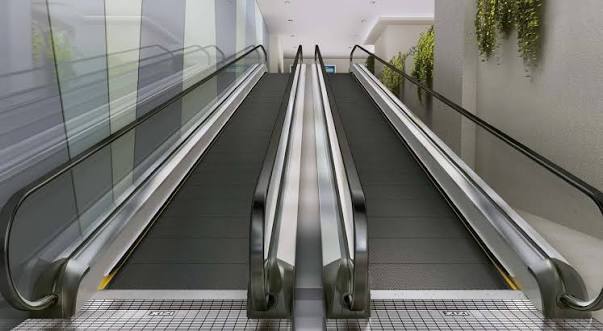
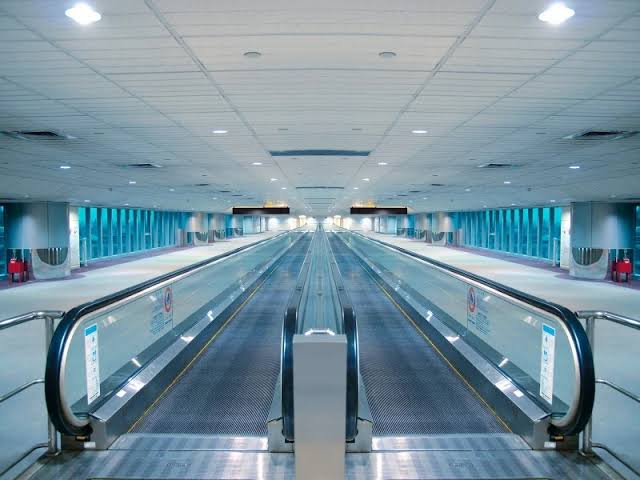
A travelator, also called a moving walkway, is a powered passenger conveyor that moves people along a mostly horizontal path. Depending on its design, it can also accommodate a gradual incline or decline.
Passengers normally stand or walk on a continuously moving platform while holding the handrail. Travelators are particularly useful when the distance between two areas is long and walking the entire route would be inconvenient.
Common applications include:
- Airports and terminal buildings
- Shopping malls
- Large exhibition centres
- Metro and railway stations
- Supermarkets and hypermarkets
- Long corridors within large commercial facilities
- Parking areas connected to buildings
Travelators are especially useful when the objective is to reduce walking effort over distance, rather than transport passengers vertically between floors.
What Is an Escalator?
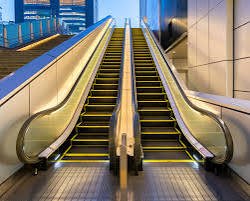
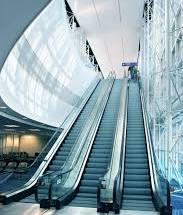
An escalator is a continuously moving staircase designed to transport passengers between different levels of a building. Its steps move in a continuous loop, allowing people to enter and exit without waiting for a conventional lift.
Escalators are commonly installed in:
- Shopping malls
- Department stores
- Airports
- Hotels
- Metro and railway stations
- Commercial buildings
- Entertainment venues
Unlike a travelator, an escalator is primarily associated with vertical or floor-to-floor movement.
Travelator vs Escalator: What Is the Difference?
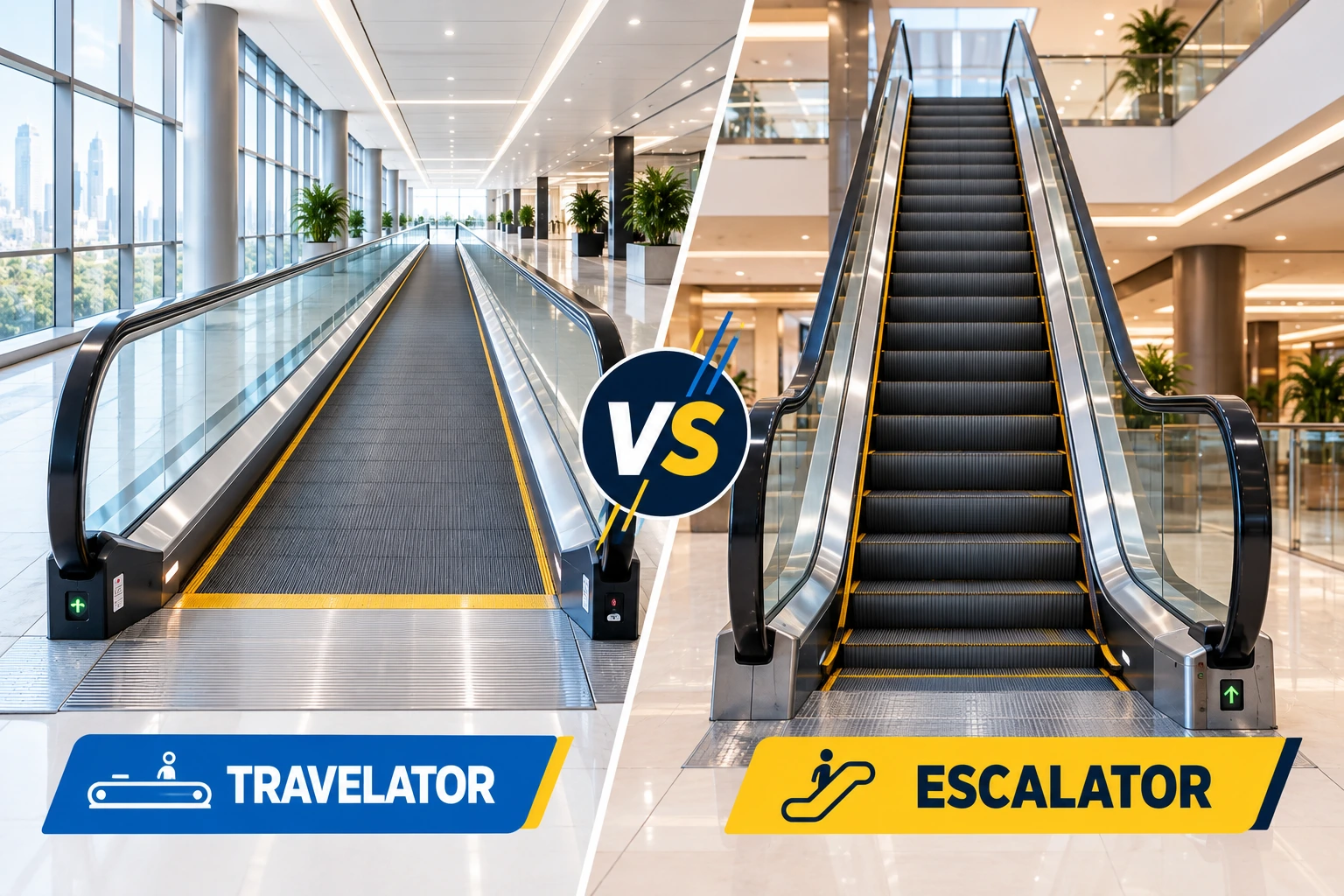
The most important travelator vs escalator distinction is the direction and purpose of movement.
| Feature | Travelator | Escalator |
| Main purpose | Horizontal or gently inclined movement | Movement between floor levels |
| Passenger surface | Moving walkway or platform | Moving steps |
| Typical direction | Horizontal, incline or decline | Mainly vertical/inclined |
| Best for | Long distances | Connecting different levels |
| Passenger experience | Similar to walking on a moving walkway | Similar to standing or walking on moving stairs |
| Common locations | Airports, malls, long corridors | Malls, stations, commercial buildings |
| Accessibility considerations | Often useful for passengers with wheeled luggage or certain mobility needs | Step-based design can be less suitable for some wheeled equipment |
The correct choice therefore depends less on which system is “better” and more on what movement problem the building needs to solve.
Escalator vs Travelator: Which One Should You Choose?
The escalator vs travelator decision becomes easier when the building’s passenger flow is considered.
Choose a Travelator for Long Horizontal Distances
A travelator is generally the more appropriate solution when passengers need to cover a considerable distance without changing floors.
For example, an airport may have a long connection between a terminal entrance and another passenger area. A moving walkway can help passengers cover that distance while reducing the effort required to walk continuously.
Travelators can also be useful in large shopping or commercial environments where important areas are spread across a broad floor plan.
Choose an Escalator for Floor-to-Floor Movement
An escalator is better suited when the main requirement is moving passengers between levels.
For example, a multi-storey shopping centre may use escalators to connect the ground floor with upper retail levels. In this situation, a travelator would not provide the same function because its primary purpose is horizontal or gently inclined movement.
Consider Passenger Behaviour
The type of movement expected from passengers also matters.
On a travelator, some users may stand while others walk. People may also be carrying luggage, shopping bags, or other belongings. On an escalator, passengers are typically positioned on individual moving steps.
Understanding these behaviours can help determine which system fits the space and expected traffic pattern.
Travelators and Escalators in UAE Commercial Buildings
The UAE has many large-scale commercial and transportation environments where passenger movement needs to be carefully considered. Airports, shopping centres, hotels, exhibition venues, and transport facilities may have large areas or multiple levels that require continuous pedestrian circulation.
For a UAE project, the selection should start with the building layout rather than simply choosing the system with the highest perceived capacity.
Ask:
- Are passengers travelling mainly across one floor?
- Do they need to move between different floors?
- Will passengers carry luggage or shopping bags?
- How long is the walking route?
- Is the system intended for a public or controlled environment?
- How much floor and ceiling space is available?
- How will passengers enter and exit the system?
- What maintenance access will be required?
These questions help connect the equipment choice to the actual passenger-flow requirement.
Advantages of Travelators
Travelators can provide several practical advantages when horizontal movement is the main challenge.
Reduced walking effort: Passengers can cover long distances while standing or walking on the moving walkway.
Useful for luggage: They can be particularly practical in environments such as airports where passengers commonly carry or pull luggage.
Continuous movement: Users do not generally need to wait for a vehicle-like transport system to arrive.
Suitable for large spaces: Travelators can connect distant areas within a large building or facility.
Flexible layout possibilities: Depending on the design, moving walkways can be installed horizontally or along suitable gradients.
Advantages of Escalators
Escalators are particularly valuable where vertical circulation is required.
Continuous floor-to-floor movement: Passengers can move between levels without waiting for a lift.
High visibility: Escalators can naturally guide passenger movement through multi-level public spaces.
Efficient circulation: They can support continuous passenger flow between frequently used floors.
Useful in high-traffic environments: Shopping centres, stations, airports, and other busy facilities can use escalators as part of their overall circulation strategy.
Escalator and Travelator Difference in Real-World Applications
The escalator and travelator difference becomes clearer through practical examples.
Imagine an airport with two terminals connected by a long passage. Passengers may benefit from a travelator because the challenge is distance.
Now consider a shopping centre with four retail floors. The main challenge is moving shoppers between levels, making an escalator more appropriate.
A large facility can also require both systems. For instance, a passenger may use a travelator to cross a long terminal area and then use an escalator to reach another level.
This is why travelators and escalators should not necessarily be viewed as competing systems. They can perform complementary roles within the same facility.
What Should Be Considered Before Installation?
The travelator and escalator difference is only one part of the selection process. The surrounding building design is equally important.
Passenger Flow
Estimate where people enter, where they need to go, and how frequently they move through the area. Equipment should support the natural flow rather than create unnecessary congestion.
Available Space
The system requires sufficient space for the equipment itself as well as safe passenger entry and exit areas. Building dimensions should therefore be evaluated before selecting a configuration.
Direction of Movement
Determine whether the requirement is primarily horizontal, inclined, or floor-to-floor. This is one of the simplest ways to narrow down the choice.
User Requirements
Consider luggage, shopping bags, mobility needs, expected passenger behaviour, and the type of facility.
Maintenance Access
Both systems contain moving mechanical and electrical components. Maintenance access should be considered during the planning stage so inspections and servicing can be performed appropriately.
Long-Term Operating Needs
The decision should consider more than initial installation. Cleaning, inspections, component replacement, operational conditions, and ongoing maintenance can all affect the suitability of a system.
Difference Between Travelator and Escalator: A Simple Rule
If you need to remember only one distinction, use this rule:
A travelator primarily helps people move across distance, while an escalator primarily helps people move between levels.
The exact application can vary because travelators may also be inclined and escalators can be configured in different layouts. However, the intended passenger movement remains the most useful starting point when deciding between them.
Final Takeaway
The right choice between a travelator and an escalator depends on the building’s layout, passenger flow, direction of movement, available space, and user requirements. A travelator is generally the stronger option for long horizontal routes, while an escalator is designed for continuous movement between different levels.
For projects involving passenger circulation equipment or related components, understanding the travelator vs escalator distinction before planning installation can help ensure the selected system matches the actual needs of the facility. For relevant spare-parts and equipment information, karsarspares can also be considered as a resource when researching suitable components.
For UAE projects, including developments in Dubai, Abu Dhabi, Sharjah, Ajman, Umm Al Quwain, Ras Al Khaimah and Fujairah, the building layout, passenger demand and intended application should guide the decision.
Need the Right Travelator or Escalator Solution for Your Project?
Choosing between a travelator and escalator depends on your building layout, passenger flow, available space and operational requirements. Karsar Elevators provides elevator, escalator and travelator solutions across the UAE, including Dubai, Abu Dhabi, Sharjah, Ajman, Ras Al Khaimah, Fujairah and Umm Al Quwain.
Planning a new installation, replacement or modernization project? Contact Karsar Elevators to discuss your requirements and find a suitable solution for your facility.
E-mail: karsarliftsescalators@gmail.com
Phone: +971 55 946 0194
Frequently Asked Questions
Is a travelator the same as an escalator?
No. A travelator is a moving walkway primarily designed for horizontal or gently inclined movement, while an escalator uses moving steps to transport passengers between different levels. Their basic functions, layouts, and applications are therefore different.
Which is better for an airport: a travelator or an escalator?
It depends on the passenger route. Travelators are generally useful for long distances across a terminal, while escalators are more suitable when passengers need to move between floors. Large airports may use both systems in different parts of the passenger journey.
Can a travelator be inclined?
Yes. Travelators can be designed for horizontal movement as well as suitable inclined or declined routes. The appropriate configuration depends on the building layout, equipment design, and intended passenger movement.
Are escalators suitable for moving luggage?
Passengers may carry luggage on escalators, but the suitability depends on the facility, user behaviour, and operational design. In environments where passengers need to move luggage over long horizontal distances, a travelator may provide a more practical solution.
Can one building use both travelators and escalators?
Yes. The two systems can complement each other. A large facility may use travelators to move passengers across long distances and escalators to connect different floors or levels.
What is the main difference between travelator and escalator systems?
The main difference is their intended direction of passenger movement. A travelator primarily moves people horizontally or along a gentle incline, whereas an escalator primarily moves people between different floor levels.
What should be checked before choosing between them?
Consider passenger flow, movement direction, available space, luggage requirements, building layout, user needs, entry and exit areas, and long-term maintenance access. These factors provide a more reliable basis for selection than choosing a system based only on appearance or initial preference.